The Love of Sashes
Hello, dear readers! My name is Marelle Couture, and today I’m thrilled to share with you my deep passion for sashes—a versatile and timeless accessory that has captivated my heart since childhood.
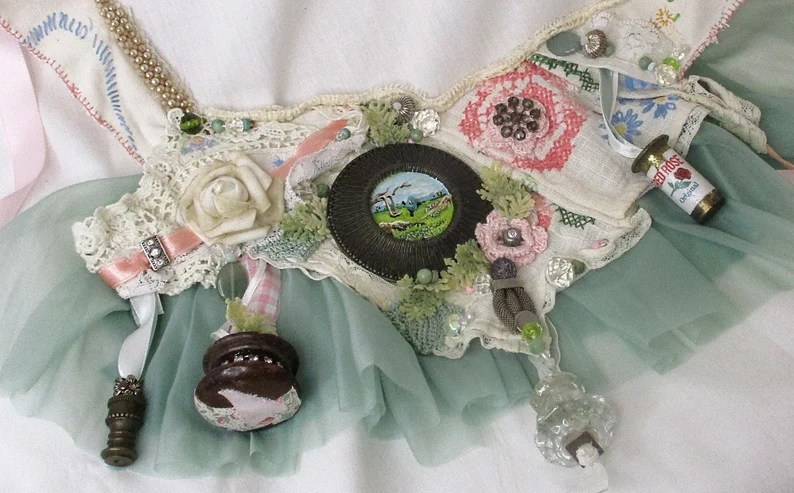
Sashes are not just pieces of fabric to me; they are a form of art, history, and personal expression. From the moment I learned to sew at my grandmother’s knee, I fell in love with the craft of making sashes. These beautiful strips of fabric, adorned with antique findings and intricate embroidery, carry a cottage core fairytale essence that I find utterly enchanting. As I sit outside on this beautiful day, working on my latest creations, I want to take you on a journey through the history of sashes, their customs, and how you can incorporate them into your everyday wardrobe.
A Historical Tapestry
The sash has a rich and varied history, stretching back centuries across many cultures. In ancient times, sashes were often worn as symbols of rank and status. In the military, sashes were used to signify rank, with different colors and styles denoting different levels of command. For example, in Napoleonic times, a red sash was worn by officers in the French army. These sashes were not just decorative; they were practical too, often used to carry maps, documents, and other essentials.
In the East, sashes have long been a staple of traditional attire. The Japanese obi, a broad sash worn with kimonos, is perhaps one of the most recognized examples. This beautifully crafted piece is both a fashion statement and a representation of Japanese culture, with various tying styles and designs indicating different occasions and social standings.
In Europe, during the Renaissance, sashes became a fashionable accessory among the nobility. They were often elaborately decorated with embroidery, jewels, and precious metals, making them a sign of wealth and refinement. The sash has continued to evolve over the centuries, becoming a beloved accessory in both formal and casual attire.
Customs and Traditions
Sashes have played a role in many cultural and ceremonial customs around the world. In some cultures, sashes are used in rites of passage, such as weddings and coming-of-age ceremonies. For example, in Mexican culture, a sash called a “rebozo” is often given to a young woman during her quinceañera, symbolizing her transition into womanhood.
In Scotland, the sash, or “sash brooch,” is a significant part of traditional Highland dress. Worn over the shoulder and fastened with a brooch, it is a symbol of Scottish heritage and pride. The colors and patterns of the sash often represent the wearer’s clan, linking them to their ancestry.
Sashes are also used in academic and religious ceremonies. In many universities, graduates wear sashes in colors that represent their field of study. Similarly, in religious settings, sashes are often part of the vestments worn by clergy, denoting their office and role within the religious community.
The Joy of Creating Sashes
Creating sashes is one of my greatest joys. I learned to sew when I was a small child, guided by the loving hands of my grandmother. She taught me not just the technical skills, but also the patience and creativity that are essential to the craft. Every sash I make is a small work of art, infused with my love for fabric and design.
My sashes are unique, each one telling its own story. I love to incorporate antique findings and embroidery, giving them a nostalgic, fairytale feel. These elements add a touch of history and character, making each sash truly one-of-a-kind. Working on them outside, surrounded by the beauty of nature, inspires me to create pieces that are not just accessories, but expressions of beauty and artistry.
Incorporating Sashes into Everyday Wardrobes
Sashes are incredibly versatile and can be incorporated into everyday wardrobes in a variety of ways. Here are a few ideas to inspire you:
- Waist Cincher: Use a sash to cinch the waist of a dress or blouse, adding a touch of elegance and femininity to your outfit. This can create a flattering silhouette and add a pop of color or texture.
- Scarf or Shawl: Drape a sash over your shoulders or wrap it around your neck as a scarf. This can add a stylish layer to your outfit, perfect for cooler days or evening outings.
- Headband or Hair Accessory: Tie a sash around your head as a headband or weave it into a braid for a boho-chic look. This is a great way to add a whimsical touch to your hairstyle.
- Belt Substitute: Replace a standard belt with a sash to add a unique twist to your jeans or trousers. This can bring a touch of creativity and individuality to a simple outfit.
- Bag Decoration: Tie a sash to the handle of your handbag or tote. This not only adds a decorative element but also makes your bag stand out with a personal touch.
- Home Décor: Sashes can also be used as decorative elements in your home. Use them as curtain tiebacks, table runners, or even wall hangings to add a cozy, artistic vibe to your living space.
Embracing the Sash
To me, sashes are more than just accessories; they are expressions of creativity, history, and personal style. Each sash I create is a labor of love, a blend of tradition and innovation. Whether worn as a fashion statement, a cultural symbol, or a piece of art, sashes have a unique way of adding charm and elegance to any ensemble.
As I sit in my yard, the sun shining and the gentle breeze rustling the leaves, I feel grateful for the opportunity to share my passion with you. I hope this glimpse into the world of sashes has inspired you to explore their beauty and versatility. Whether you decide to wear them, create them, or simply appreciate their history, sashes have a timeless appeal that can bring joy and creativity into your life.
Thank you for joining me on this journey. Now, if you’ll excuse me, I have a new sash to finish—it’s going to be a lovely addition to my collection!
 La Marelle Couture
Leave a comment